

Translating Latin requires mastering grammar, including declensions and cases. Utilize exhaustive dictionaries like Lewis and Short for lexical support. Digital assistants offer aids but require critical interpretation for historical nuance. Engage primary sources with thorough historical research. Active translation involves contextual analysis and idiom accuracy. Further exploration will reveal specific techniques and resources.
Key Takeaways
- Master Latin grammar fundamentals, including declensions and cases.
- Utilize comprehensive Latin dictionaries and specialized glossaries.
- Leverage digital translation assistants and corpus analysis tools.
- Engage with primary sources through historical and contextual research.
- Practice active translation techniques and seek feedback.
Understanding Latin Grammar Fundamentals

Understanding Latin grammar fundamentals is essential for accurate translation. A consistent approach to Latin pronunciation, even with regional variations, aids comprehension and fluency.
Mastery of Latin syntax, the rules governing word order and sentence structure, is paramount. Recognizing declensions for nouns, pronouns, and adjectives, as well as conjugations for verbs, allows for the correct identification of grammatical function.
Cases, such as nominative, genitive, dative, accusative, and ablative, dictate a word’s role within a sentence, influencing meaning and relationships between different parts of the text.
Incorporating SEO best practices in content creation can enhance visibility and engagement, ensuring that your translation work reaches the intended audience effectively.
The proper grasp of these elements forms the bedrock for any successful translation attempt.
Essential Lexical Resources for Translators

A translator’s success hinges on their judicious selection and utilization of appropriate lexical resources. For Latin, a robust understanding of Latin vocabulary is paramount, necessitating access to comprehensive dictionaries and glossaries. Classical Latin dictionaries, such as those compiled by Lewis and Short or the Oxford Latin Dictionary, offer unparalleled depth in definitions, etymologies, and contextual examples. Beyond traditional lexicons, specialized glossaries concentrating on specific periods or genres can prove invaluable. Moreover, the advent of digital tools has introduced powerful Lexical databases. These digital resources often facilitate quicker searches and cross-referencing, allowing translators to efficiently identify nuances and appropriate equivalents for ancient words within modern target languages, thereby enhancing accuracy and stylistic fidelity. Additionally, AI writing assistants like Stravo AI can complement traditional resources by providing automated suggestions and insights, streamlining the translation process for enhanced efficiency and precision.
Leveraging Digital Translation Assistants
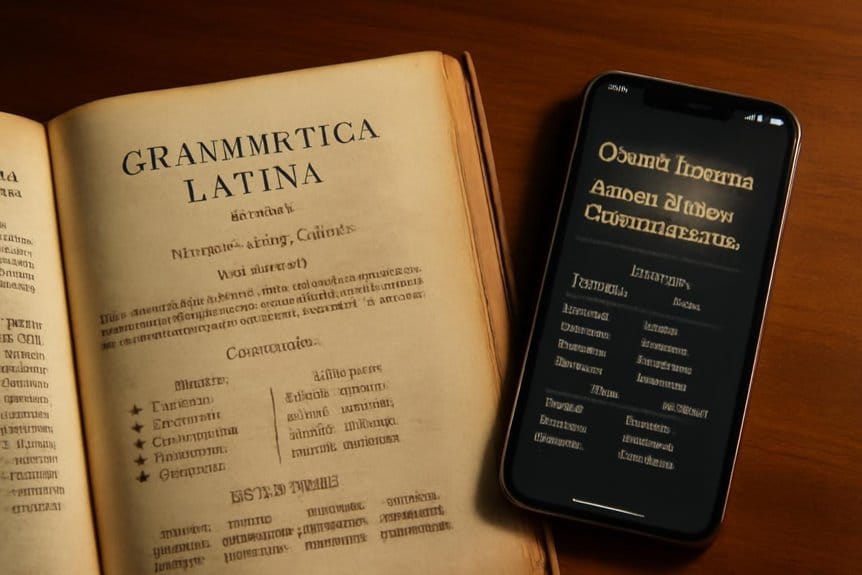
While complete dictionaries remain foundational, modern translators of Latin now increasingly employ digital translation assistants. These sophisticated tools, ranging from online translators with Latin capabilities to specialized corpus analysis software, offer immediate access to vast linguistic data. They can quickly identify word meanings, grammatical structures, and even suggest potential contextual interpretations. However, users must exercise critical judgment. Digital assistants, while powerful, often struggle to grasp the intricacies of historical context and cultural nuances inherent in ancient texts. To achieve accurate translations, these tools should be viewed as supplementary aids, not replacements for human expertise. Understanding the limitations and applying a scholarly approach is paramount for effective Latin translation. Additionally, incorporating SEO and content optimization strategies can enhance the visibility and accessibility of translated content online, ensuring it reaches a broader audience.
Strategies for Engaging With Primary Sources
How does one effectively engage with primary Latin sources? A foundational approach involves understanding the historical and cultural context in which the text was created. This necessitates careful contextual analysis, considering the author’s background, the intended audience, and the prevailing societal norms.
Effective engagement follows these key strategies:
- Thorough Historical Research: Investigate the period and circumstances surrounding the source’s creation.
- Linguistic Nuance Awareness: Recognize that Latin vocabulary and grammar can carry different meanings across historical periods and regions.
- Cultural Interpretation: Seek to understand the underlying values, beliefs, and social structures reflected in the text.
- Cross-Referencing: Compare the source with other contemporary texts and scholarly analyses to build a richer understanding.
By incorporating audience segmentation and personas, one can tailor research approaches to better align with the specific interests and knowledge levels of different reader groups, enhancing the educational impact of the engagement.
Practicing Active Translation Techniques
Translating Latin effectively requires more than simply converting words; it demands the implementation of active translation techniques. Engaging in rigorous contextual analysis is essential. This involves not only understanding the immediate sentence structure but also the broader historical, cultural, and literary setting of the text.
Attention must be paid to the nuances of Latin grammar and syntax, recognizing how they shape meaning. Moreover, translators should focus on rendering idiomatic expressions accurately. Direct, literal translation of these phrases can often lead to awkward or nonsensical renderings in the target language.
Consequently, identifying and finding appropriate equivalents for these expressions is vital for producing a faithful and comprehensible translation. To enhance translation skills, utilizing tools like HyperWrite’s Magic Editor can improve clarity and style, ensuring high-quality results.
Building Your Latin Translation Proficiency
Honing one’s Latin translation proficiency is a continuous journey that builds upon foundational knowledge and active practice. Beyond merely understanding grammar and syntax, developing advanced skills requires a multifaceted approach. Key to this progression is consistent vocabulary acquisition, ensuring a robust understanding of word meanings and their nuances. To further enhance capability, consider the following:
- Engaging with a diverse range of Latin texts, from classical prose to medieval poetry.
- Deepening understanding of historical and cultural context, which informs idiomatic expressions and authorial intent.
- Regularly reviewing and analyzing previously translated passages to identify areas for improvement.
- Seeking feedback from experienced Latinists or participating in study groups.
In addition, utilizing AI writing tools for academic purposes can greatly enhance one’s proficiency in Latin translation by ensuring proper citation and referencing in styles like APA, MLA, and Chicago, which are crucial for maintaining scholarly standards.