
Article vs Blog What to Use and When
July 7, 2025

At the heart of the "article vs. blog" debate is a simple, yet crucial, distinction: Articles are built to inform with objective facts, while blogs are designed to engage with personal stories and perspectives. Which one you choose really boils down to your goal. Are you trying to establish yourself as a formal authority, or are you hoping to build a community of followers who feel connected to your brand?
What's The Real Difference Between an Article and a Blog?
It's true that the lines have blurred over the years, but knowing the foundational differences between an article and a blog is still key to a smart content strategy. Each format has its own job to do, and picking the right one affects everything from your SEO performance to how your audience perceives you.
Get this wrong, and you'll feel it. You might end up with an article that's too rigid and academic for a blog audience, or a blog post that's too casual and lacks the credibility needed for a serious topic.
The main separators are often tone, style, and purpose. Think of traditional articles as the formal, professional sibling. They’re typically written in a more detached second or third-person voice and packed with well-researched information. Blogs, on the other hand, are the conversational, approachable ones, usually written in a first-person voice to share opinions, experiences, and stories. You can find some great insights on this from the SEO content experts over at SEOSherpa.
The takeaway is this: An article aims to be a definitive resource that provides answers. A blog aims to be an ongoing conversation that invites discussion.
To make this even clearer, let's break it down side-by-side.
Quick Comparison: Article vs. Blog at a Glance
This table gives you a high-level look at the core differences between a classic article and a typical blog post.
| Characteristic | Article | Blog |
|---|---|---|
| Primary Goal | To inform, educate, or report on a topic with authority. | To engage, entertain, and build a community or following. |
| Tone & Style | Formal, objective, professional, and fact-based. | Informal, subjective, conversational, and opinion-driven. |
| Authorship | Often written by a subject matter expert or journalist (third-person). | Typically written by an individual or brand voice (first-person). |
| Structure | Follows a more rigid structure (introduction, body, conclusion). | Flexible, scannable format with short paragraphs and headings. |
Looking at them this way, you can see how both are incredibly useful tools. While a formal article is perfect for cementing your expertise, you can see how we use posts to build lasting reader relationships by checking out the Stravo AI blog. Ultimately, having both in your content toolkit gives you the flexibility to achieve different goals.
A Detailed Comparison of Core Attributes

To really get to the heart of the article vs blog discussion, we have to look past the surface-level definitions. What truly matters are the core ingredients that give each format its unique flavor and power. I'm talking about the fundamental differences in tone, structure, purpose, and how they engage readers.
These aren't just academic distinctions; they directly impact how your audience connects with your message and what they do next. Getting these details right is the secret to picking the perfect format for your goals.
Tone and Voice: The Objective Expert vs. The Relatable Guide
The first thing you'll notice when reading an article versus a blog is the voice. An article almost always speaks from a formal, objective standpoint. It uses a third-person perspective to present facts, data, and expert analysis without letting the author's personality get in the way. The goal is to be seen as an authoritative, impartial source-think of a well-researched news report or an academic journal.
A blog post, on the other hand, is all about creating a personal connection. It's conversational and usually written in the first person ("I think..." or "We found..."). This informal style makes room for opinions, personal stories, and a strong brand voice. It’s less about being a distant authority and more about being a friendly guide who’s starting a conversation.
Structure: The Pyramid vs. The Skim-Friendly Layout
How the content is organized is another massive difference. Articles often stick to the classic inverted pyramid structure you see in journalism. The most critical information hits you right at the top, with supporting details following in order of decreasing importance. It’s built for efficient delivery of the main points.
Blogs are structured for how people actually read online: they skim. This means the layout is intentionally broken up and easy to scan. You'll see:
- Short paragraphs to prevent intimidating walls of text.
- Lots of subheadings (H2s and H3s) that act as signposts.
- Bulleted and numbered lists to make key points pop.
- Bolded text to draw the eye to crucial takeaways.
This isn't just about making it look pretty. This scannable format is a cornerstone of good on-page SEO, as it helps search engines quickly understand the content’s structure and main ideas.
Here's the bottom line on structure: An article is built to be read top-to-bottom like a formal report. A blog is designed to be scanned and absorbed in pieces, perfectly suited for our modern, shorter attention spans.
Purpose: To Inform vs. To Engage
While both aim to be valuable, their core purposes are quite different. An article’s primary job is to inform or educate with a sense of finality. It strives to be a definitive, comprehensive resource that thoroughly answers a question. Good articles often become evergreen content, staying relevant for years.
A blog's purpose is much more dynamic. It's built to engage, create a community, and spark ongoing interaction. A single blog post is rarely the last word on a subject. Instead, it's an invitation to a broader conversation, actively encouraging comments, social shares, and newsletter sign-ups. This dialogue is what builds a loyal following and genuine brand affinity over time.
Engagement and Timeliness: The Static Resource vs. The Living Conversation
Finally, let's talk about how each format exists in time. An article is usually a static, one-and-done piece. Once it's published, it’s not typically updated unless a core fact becomes outdated. The reader's role is passive; they consume the information, but there isn't a built-in way to join a discussion.
Blogs are alive. They are inherently timely, published in chronological order, and often tackle current trends or evolving topics. Most importantly, they have a feedback loop baked right in.
- Comment sections create a direct line for reader feedback and discussion.
- Social sharing buttons make it easy for readers to spread the word.
- Internal links guide visitors deeper into your site, keeping them engaged.
This makes a blog a living, breathing part of your website. It’s a platform for continuous conversation that builds your authority and brings in traffic, one post at a time.
How Digital Demands Are Blurring the Lines
While the traditional definitions for articles and blogs are clear-cut, the real world of content marketing isn't so black and white. The once-rigid separation between the two is dissolving, and it's happening for two big reasons: search engine optimization (SEO) and a shift in what audiences expect. Today's readers demand credible, well-researched information, but they want it served up in a way that's engaging and easy to digest.
This has led to the rise of a powerful hybrid format, what you might call an "article-blog." This model blends the best attributes of each. It takes the factual depth and authority you'd expect from an article and combines it with the personality, readability, and SEO-friendly structure of a great blog post.
The Rise of the Hybrid Content Model
Modern content strategy is rarely about choosing one or the other in the article vs blog debate. It’s about smart integration. You can see this happening everywhere-major publications that once published only formal articles are now incorporating blog-like features to stay competitive in search results and capture reader attention.
For example, it's now common to see established news sites use a more conversational tone. They break up massive walls of text with subheadings, bullet points, and lots of images. They aren't just doing this for looks; search engines like Google reward content that directly answers a user's question and provides a positive experience. A dense, 5,000-word article with no formatting simply won't perform as well as a well-organized piece that readers can easily skim.
This shift isn't accidental. It's a direct response to how we consume information. We seek out expertise but prefer it in a digestible, scannable format that respects our time.
This hybrid approach has proven incredibly effective. Even with their core differences, the lines have blurred significantly. You'll see outlets like Forbes using a blog-style approach to improve their SEO footprint and pull in a wider audience. This tactic marries the information-rich content of articles with the engagement-focused techniques of blogs.
Why This Hybrid Approach Works
The "article-blog" format is so successful because it satisfies two masters at once: algorithms and human readers. This makes it a fantastic tool for building both authority and a loyal following.
Here’s a quick look at why it’s so powerful:
- Enhanced SEO Performance: This format lets you weave keywords into a natural, conversational narrative while still having the length and structure that search engines associate with authoritative content.
- Increased Reader Engagement: By presenting complex information in a format that's easy on the eyes, you hold attention longer. This reduces bounce rates and encourages people to share your work.
- Builds Relatable Authority: Your brand comes across as an approachable expert, which is key to building trust and a sense of community.
Technology has been a major catalyst in this evolution. As we explore in another guide, AI writing is changing content creation, giving creators the ability to produce high-quality, structured, and engaging hybrid content much more efficiently. This allows brands to publish a consistent stream of expert-level information without losing the personal touch that builds lasting relationships.
How to Choose the Right Format for Your Goal
Picking between an article and a blog post isn't just about semantics-it's a critical strategic decision. The format you choose directly influences how your message is received and whether you hit your business goals. At its heart, the article vs blog debate is about matching your content to your ultimate objective.
What are you trying to accomplish? Are you looking to publish groundbreaking research that cements your authority in the industry? Or is your aim to build a loyal community and drive a steady stream of traffic from search engines? Each of these goals requires a completely different playbook.
This decision tree helps visualize the choice, mapping your needs to the best format based on things like tone, depth, and how often you plan to publish.
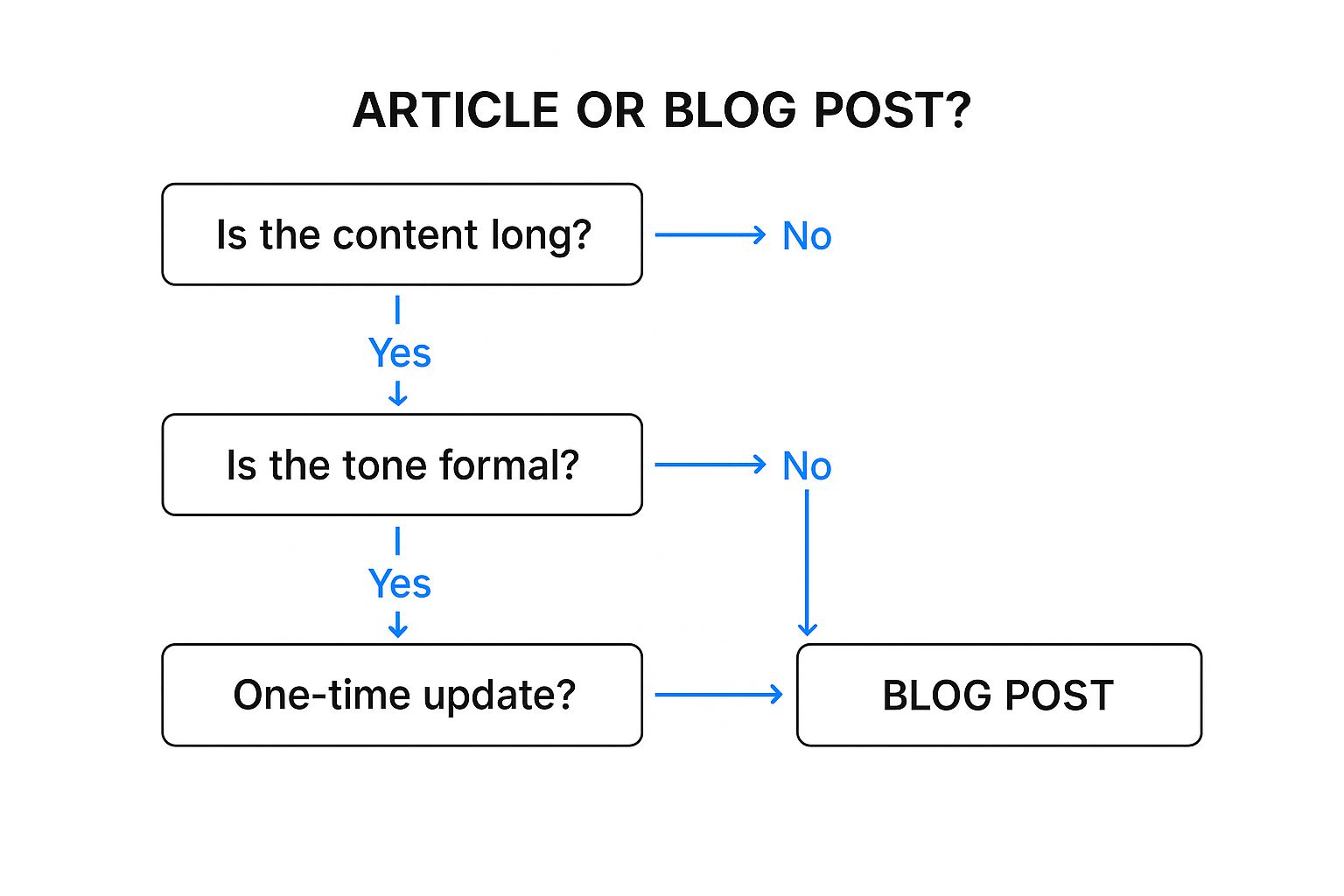
As you can see, if your goal requires a formal tone and a deep, definitive piece of content, an article is the way to go. For more frequent, conversational content designed for ongoing engagement, a blog is a natural fit.
To make this even clearer, let's break down the specific scenarios for each.
When to Choose an Article
An article is your best bet when authority, credibility, and a formal tone are non-negotiable. Think of it as your tool for making a definitive statement or presenting information that needs to be seen as objective and meticulously researched.
You should opt for an article when your primary goal is to:
- Publish Original Research or White Papers: If you have proprietary data or deep industry findings, an article gives you the formal structure you need to present your methodology, evidence, and conclusions with authority. This is a classic way to build serious credibility.
- Issue a Formal Press Release or Company Announcement: Major news-like a merger, acquisition, or new C-suite hire-demands the official, objective tone of an article. This ensures journalists and stakeholders take the announcement seriously.
- Create Cornerstone Evergreen Content: For those foundational topics in your niche that don't change often (like "The Complete History of SEO"), a comprehensive, well-researched article acts as a long-term authoritative resource. It can attract backlinks and drive organic traffic for years to come.
An article is the right choice when your content needs to be the final word on a subject. Its purpose is to stand as a static, credible reference point that solidifies your expertise.
When to Choose a Blog Post
A blog post shines when your goals revolve around engagement, community building, and driving SEO traffic. Its conversational and flexible nature makes it perfect for connecting with your audience regularly and building a relationship over time.
You should go with a blog post when your primary goal is to:
- Boost SEO and Target Niche Keywords: Blogs are built for creating a steady flow of content aimed at specific long-tail keywords. Every post is a new page for Google to index and another chance to attract your ideal audience. For those wanting to scale this effort, using the best AI article writer can help produce optimized posts quickly.
- Build a Community and Foster Engagement: The informal tone and comment sections of a blog naturally invite conversation. This helps turn passive readers into an active, engaged community. It’s the perfect place for company updates, behind-the-scenes content, and asking for audience feedback.
- Share Timely News and Industry Commentary: Want to weigh in on a recent industry trend or react to a news story? A blog post can be published quickly. Its informal style is ideal for timely commentary that keeps your audience in the loop and positions you as a relevant voice.
Decision Matrix: Choosing Your Content Format
To simplify your decision, this table maps common content goals to the most effective format, highlighting the key strategic thinking behind each choice.
| Content Goal | Recommended Format | Key Strategic Consideration |
|---|---|---|
| Establish thought leadership with original data | Article | Builds long-term authority and credibility; serves as a static, citable resource. |
| Drive consistent organic traffic | Blog Post | Targets numerous keywords over time; creates a steady stream of fresh content for SEO. |
| Announce a major company milestone | Article | Provides the formal, objective tone needed for official communications and press. |
| Build an engaged community | Blog Post | The conversational tone and comments section foster dialogue and reader loyalty. |
| Explain a complex, foundational topic | Article | Offers the depth and structure required for a comprehensive, evergreen guide. |
| React to timely industry news | Blog Post | Allows for rapid publication and informal commentary on current events. |
Ultimately, choosing the right format isn't a minor detail-it's a foundational part of a successful content strategy that ensures your efforts are aligned with your goals from the very start.
Optimizing Content for SEO and Engagement

Deciding between an article and a blog is just the starting point. The real work begins when you optimize that content to connect with both search engines and your audience. How you approach this depends entirely on the format you've chosen, as each has its own path to success.
For blogs, success is all about consistent interaction and nailing specific search queries. With articles, the aim is to build unshakable, long-term authority. Of course, both need a solid foundation built on SEO basics like mobile-friendliness and sharp title tags.
SEO Strategies for Engaging Blog Posts
A blog thrives on its dynamic, conversational feel. Your optimization strategy needs to lean into that strength, focusing on building a genuine relationship with readers and, by extension, search engines.
- Target Conversational Keywords: Think about how people actually talk and search. Instead of a stiff title like "A Guide to Plumbing Repair," a blog post titled "How to Fix a Leaky Faucet with No Experience" directly answers a user's question. This focus on long-tail keywords is key.
- Encourage Reader Interaction: Comments are gold. They signal to Google that people are actively engaging with your content. A simple way to do this is to end your posts with a direct question to get the conversation started. Always respond to comments-it shows you're listening.
- Build a Strong Internal Linking Web: Treat every new post as a chance to link back to your older, relevant content. This creates a powerful web that keeps readers on your site longer and shows search engines the depth of your expertise on a topic.
The heart of blog SEO is creating a living ecosystem of content. Each post should support the others, weaving a web of value that pulls in organic traffic and nurtures a loyal community.
SEO Strategies for Authoritative Articles
When you're optimizing an article, the focus shifts from conversation to credibility. Your mission is to create a resource so comprehensive and well-researched that it becomes an indispensable reference in your field.
This means building authority through solid evidence and clear structure. Back up your claims by citing reputable sources, weaving in data and statistics, and using structured data (like schema markup) to help search engines classify your content as a definitive source. Targeting evergreen keywords-terms that maintain steady search interest over time-is crucial for ensuring your article delivers value for months, or even years, to come.
In the end, whether you're crafting a quick blog post or a deep-dive article, the objective is the same: produce high-quality content without wasting time. You can learn how to create SEO content with AI in under 10 minutes in our guide, which breaks down how to make this process faster for any format. By applying these tailored SEO techniques, you'll give every piece you publish the best possible chance to be seen and valued.
Common Questions About Articles and Blogs
Even with clear definitions, you’ll inevitably run into some gray areas when deciding between an article and a blog post. The line between them can get blurry, so let's walk through some real-world scenarios to help you make smarter, more confident content decisions.
We'll tackle some of the most common questions that pop up in the article vs. blog debate. Getting these answers straight will give you the final bit of clarity you need to master both formats.
Can a Blog Post Ever Be Considered an Article?
Absolutely, but it all comes down to the depth and intent behind the piece. A blog post can certainly earn the credibility of an article when it goes beyond simple opinion to deliver deep, well-researched, and objective information. This often happens with long-form, evergreen content that solidifies its place as a go-to resource on a subject.
For instance, a 3,000-word blog post that breaks down a complex technical process with cited data and expert quotes is, for all intents and purposes, functioning as an article. It’s just been published within a blog's framework to gain better SEO traction and reach a wider audience.
The real difference-maker is purpose. When the primary goal shifts from starting a conversation to being the definitive answer, a blog post takes on the authority of an article.
Which Format Is Better for Generating Leads?
This is a question I hear all the time, and the answer really hinges on your specific lead generation goals. Generally speaking, blogs are fantastic for top-of-funnel lead generation. Their consistent publishing schedule and conversational style are perfect for building a community and attracting steady organic traffic over time.
Articles, on the other hand, are powerhouses for generating highly qualified leads. Think about a comprehensive white paper or an in-depth research report presented in an article format. You can place this high-value content behind a form, attracting serious prospects who are happy to share their contact info for truly authoritative insights.
For new businesses trying to do both, our complete guide on content marketing for startups lays out strategies for building a marketing funnel with a healthy mix of content types.
How Does Content Length Impact the Format Choice?
Word count is a pretty good clue, but it’s not the whole story. As a general rule of thumb, shorter pieces-typically under 1,500 words-that are conversational and tied to current events fit perfectly into the blog format. They're designed for quick reads and immediate engagement.
Longer pieces, especially those over 2,500 words, usually need the structure of an article. That extra length is necessary to accommodate deep research, supporting evidence, and a more formal argument. Getting the length right ensures your content’s depth matches its purpose and what your audience expects from it.
Write smarter, starting today
Join entrepreneurs and teams who draft, rewrite and ship their content with one AI suite.