
Can AI Replace Human Creativity
November 9, 2025
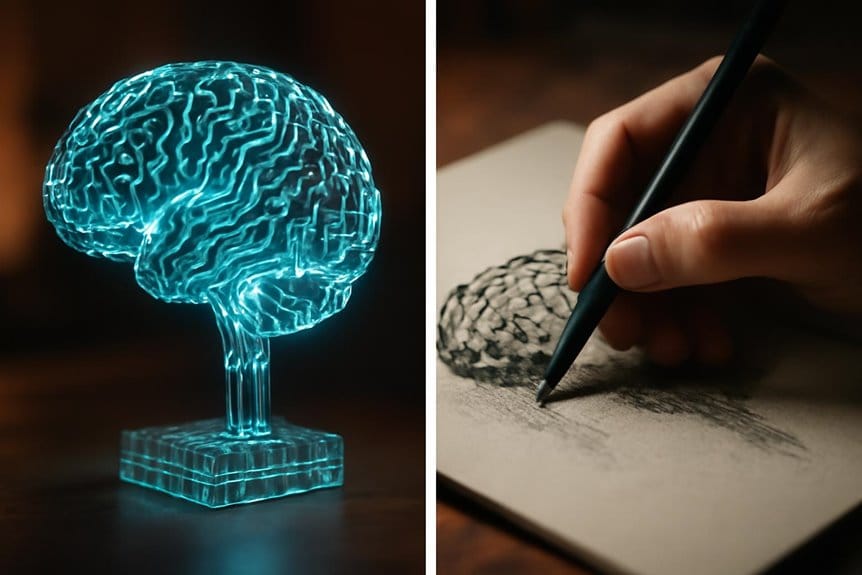
AI can automate and augment many creative tasks, producing impressive outputs from large datasets. It mimics styles and accelerates workflows. It lacks emotions, lived experience, and moral judgment. It cannot feel pain, joy, or cultural memory that fuels human originality. Machines remix patterns; humans bring intuition, context, and ethical reflection. The creative professions adapt with tools and safeguards. Continue for a fuller overview of history, limits, and authorship, labor, compensation, and policy implications and regulation.
Key Takeaways
- AI can generate vast, novel variations quickly, aiding ideation and experimentation.
- Algorithms excel at routine, pattern-based tasks but struggle with authentic emotional insight.
- Human creativity involves consciousness, lived experience, and moral judgment machines cannot replicate.
- Training data and copyright issues raise authorship, attribution, and fairness concerns for AI-generated art.
- The most realistic outcome is AI as a collaborator that augments rather than replaces human creators.
Creativity and the Human Element
How does creativity retain its human core in an era of algorithmic mimicry? Observers note that human creativity stems from emotions, personal experience, and cultural context, producing authentic expression machines cannot genuinely feel.
Artistic works channel raw feelings-love, pain, hope-grounded in consciousness rather than code. Spontaneous ideas and intuition generate unpredictable breakthroughs, emerging from sudden emotional shifts and lived moments, not deterministic algorithms.
Furthermore, critical thinking and emotional intelligence enable artists to shape narratives, evaluate meaning, and respond ethically to audiences. These faculties permit novel perspectives beyond pattern replication, sustaining originality.
While tools can simulate styles, the human element-subjectivity, memory, moral judgment-remains central to art’s depth and relevance in ways AI struggles to match. It preserves meaning through lived context, choice, and unpredictable insight.
AI-generated text often lacks the emotional depth and cultural context that human creativity embodies, which limits its ability to replicate the nuanced expressions found in artistic works.The History of Machine-Made Art
The history of machine-made art traces a steady progression from experimental programs to high-profile commercial works. Early work began in the 1970s with Harold Cohen’s program AARON, regarded as the first sustained system producing computer-generated images and influencing subsequent research in automated creativity. Later projects like EMI and Google’s DeepDream used neural networks to generate abstract and surreal outputs, broadening forms of digital art. Markets responded when an AI-generated artwork, the portrait "Edmond de Belamy," sold at Christie’s in 2018 for $432,500, signaling collector interest. Innovations such as digital editing have repeatedly altered artistic practice, integrating algorithmic tools with traditional techniques, and fostering ongoing experimentation in studio and commercial contexts. Public discourse about authorship and process continues to evolve.
Emotion and Authenticity in Art
Why does art grounded in lived experience resonate more deeply than algorithmic mimicry? Observers note that authentic emotional expression arises from genuine human experiences-love, loss, hope-and that AI cannot feel or originate such states.
Research indicates audiences find works derived from raw feeling more relatable and impactful than simulations. Creators channel personal pain or joy into material, producing depth and sincerity absent in machine outputs.
While algorithms can replicate tone or mood, they lack the emotional awareness required to generate authentic art. The emotional power of storytelling and music depends on a creator’s personal voice and lived experience, anchoring meaning in ways that current AI techniques cannot reproduce or fully comprehend.
Top language translator tools prioritize cultural accuracy and contextual understanding, which underscores the importance of genuine human expression in art.
This gap preserves a distinct human role in cultural expression and interpretation today.
AI in Film, Television, and Music
A growing number of studios, composers, and showrunners deploy AI systems-ranging from IBM Watson to Google’s Magenta-to generate music, suggest edits, and draft scenes, accelerating routine production tasks while leaving narrative judgment and performance to humans. In film, television, and music, AI tools assist with scene selection, special effects preparation, soundtrack creation, and template-driven script generation, typically operating as content-based assistants. These systems mimic storytelling structures but rarely achieve true emotional depth or authentic expression; resulting outputs can feel mechanical or formulaic. Producers value AI for efficiency and iterative support within the creative process, yet directors, actors, and composers retain final authority over tone, nuance, and audience-facing decisions to preserve human-led artistry. Market uptake grows while practical limitations keep human oversight indispensable today. To effectively harness AI tools, it's important to strategically integrate them into existing workflows, allowing the fusion of AI-generated content with human editing to ensure polished outputs.
Ethical and Social Implications
Although AI tools accelerate production and expand access to creative techniques, they provoke urgent questions about authorship, labor value, and cultural stewardship. Observers note ownership rights are contested when models train on unconsented works, raising ethical concerns about attribution and compensation. Debate persists whether AI outputs qualify as original works or statistical recombinations. Consequences for creative industries include potential market saturation and reduced income for practitioners. Policy, platform rules, and industry norms must balance innovation with protection of human creators. AI-driven personalization allows for tailored content, but ethical considerations and data privacy need to be prioritized as AI becomes more embedded in creative processes.
| Stakeholder | Risk | Remedy |
|---|---|---|
| Artists | Loss of income | Licensing |
| Platforms | Liability | Transparency |
| Audiences | Mistrust | Clear labeling |
Responsible development and regulation are essential to ensure AI enhances rather than undermines human creativity, with enforceable attribution, fair remuneration, and educational initiatives supporting sustainable cultural ecosystems and oversight.
Write smarter, starting today
Join entrepreneurs and teams who draft, rewrite and ship their content with one AI suite.