
How to Manage Remote Teams: Tips for Success
July 24, 2025

When you boil it all down, leading a successful remote team really comes down to three things: being deliberate with your communication, building a culture on a foundation of trust, and focusing on results, not busywork. This isn't about slapping a few new rules on top of your old office playbook. It's a fundamental shift in how you lead, and it’s built to last.
The New Playbook for Remote Leadership
Let's be clear: remote work isn't a fad or a temporary experiment anymore. It's a permanent part of how modern companies operate. We're looking at a future where, by 2025, distributed teams will be the norm, not the exception. The numbers already back this up. In 2023, about 28% of employees across the globe were already working remotely, and an overwhelming 91% say they want to stay that way.
This shift means the old ways of leading are officially obsolete. You can't manage by walking around an office or rely on those spontaneous hallway conversations to keep everyone in the loop. Your success as a leader now hinges on your ability to build a structured and supportive environment that empowers your people to thrive, no matter where their desk is. It's all about designing systems that are native to a distributed world.
Core Principles for Modern Remote Management
The bedrock of great remote leadership is built on clarity, trust, and a relentless focus on results. The best remote managers I've seen get this. They don't just try to copy-paste their office culture onto Slack. Instead, they thoughtfully design a new way of working from the ground up. If you're looking for more on this, there are some great resources out there on managing remote teams effectively that are worth a read.
In this guide, we’re going to get practical. I'm not going to tell you to just add more meetings to an already packed calendar. We'll talk about how to build a communication architecture where every interaction has a purpose. This includes using the right tools and even automation to make work smoother-a concept we touch on in our piece about how AI is changing content creation.
It's not just theory. A two-year study of over 800,000 employees found that going remote can keep productivity steady, or even boost it. The lesson here is simple but powerful: trust your people, give them clear goals, and get out of their way so they can deliver.
To give you a roadmap of where we're headed, I’ve broken down the core strategies into three pillars. Think of these as the foundational mindset shifts you need to make to build a high-performing remote team.
The Three Pillars of Effective Remote Management
Here's a quick look at the core principles we'll be diving into. This table gives you a high-level overview of the strategies that make the biggest difference when managing a team you don't see in person every day.
| Pillar | Core Principle | Key Actions |
|---|---|---|
| Intentional Communication | Clarity and purpose over constant contact. | Define channels for sync/async work; create a communication charter. |
| Trust-First Culture | Build a culture on autonomy and accountability. | Run effective one-on-ones; celebrate wins; promote peer recognition. |
| Outcome-Driven Performance | Measure results, not hours logged. | Set clear OKRs; focus on project milestones; avoid micromanagement. |
Each of these pillars represents a crucial part of the remote leadership puzzle. Master them, and you'll not only adapt to the new way of working-you'll lead the charge. Let's get into the specifics.
Designing Your Team's Communication System
Let’s be honest: great remote management isn't about more meetings. It's about making every single interaction count. One of the biggest hurdles I see leaders face when they manage remote teams is the dreaded "Zoom fatigue"-that soul-crushing exhaustion from back-to-back video calls.
The fix isn't just fewer meetings; it's a smarter communication architecture. This is a system where everyone on your team knows exactly where to go for what, without a second thought. This means getting deliberate about synchronous (real-time) versus asynchronous (on your own time) communication. Not every question needs an instant reply, and not every announcement deserves a spot on the calendar.
Get this wrong, and you're signing your team up for constant interruptions and a fast track to burnout. But get it right? You empower them with the focus and autonomy they need to do their best work.
Synchronous vs. Asynchronous Communication
Think of your communication channels as a toolkit. You wouldn't grab a sledgehammer for a delicate job, right? Using the wrong communication method creates unnecessary friction and wastes time.
- Synchronous communication is your tool for immediacy. Pull it out for collaborative problem-solving, urgent fire-fighting, or one-on-one check-ins where tone and immediate feedback are everything.
- Asynchronous communication should be your default setting for most of the workday. It’s perfect for status updates, sharing FYI-style info, and giving feedback that benefits from a little more thought. This approach is a game-changer for teams spread across different time zones and for protecting deep-work time.
A classic mistake is letting everything feel urgent, especially with instant messaging. When every chat notification demands an immediate response, you cultivate a reactive culture, not a proactive one. By setting clear expectations for when to use each method, you give your team the greatest gift of all: uninterrupted time.
A powerful shift I’ve seen work wonders is adopting an "async-first" mindset. Unless a topic is truly time-sensitive or needs that live, back-and-forth energy, it should happen asynchronously. This single change can radically improve both productivity and work-life balance for everyone.
Choosing the Right Communication Tool for the Job
To make this async-first culture a reality, you need the right tools for the job. The goal is to build a tech stack where each tool has a clear and distinct purpose, preventing confusion and overlap.
Here's a breakdown to help you match the communication type to the right digital tool.
| Communication Type | Purpose | Recommended Tools | Best For |
|---|---|---|---|
| Real-Time Chat | Quick questions, social connection, urgent but simple issues | Slack, Microsoft Teams | Fostering team camaraderie, getting fast answers to blockers. |
| Video Conferencing | Deep collaboration, strategic planning, building rapport | Zoom, Google Meet | Team-building activities, complex discussions, 1-on-1s. |
| Project Management | Task assignments, progress tracking, status updates | Asana, Trello, Jira | Maintaining a single source of truth for all project work. |
| Video Messaging | Walkthroughs, detailed feedback, process demos | Loom, Vidyard | Explaining complex visuals without a live meeting. |
| Shared Documents | Collaborative writing, document creation, feedback | Google Docs, Notion | Co-authoring documents and building a knowledge base. |
| Formal external communication, official announcements | Gmail, Outlook | Communicating with clients, partners, and company-wide updates. |
Creating this clarity means a developer knows they don’t need to watch Slack all day for project updates-that information lives in Asana. This system breaks down information silos and reduces the mental tax of trying to follow conversations across ten different apps.
Creating a Communication Charter
Once you've defined your channels, document them. A communication charter is essentially a living "rules of the road" guide for your team. It removes all the guesswork.
This visual shows how a well-structured system keeps a distributed team in sync, no matter where they are.
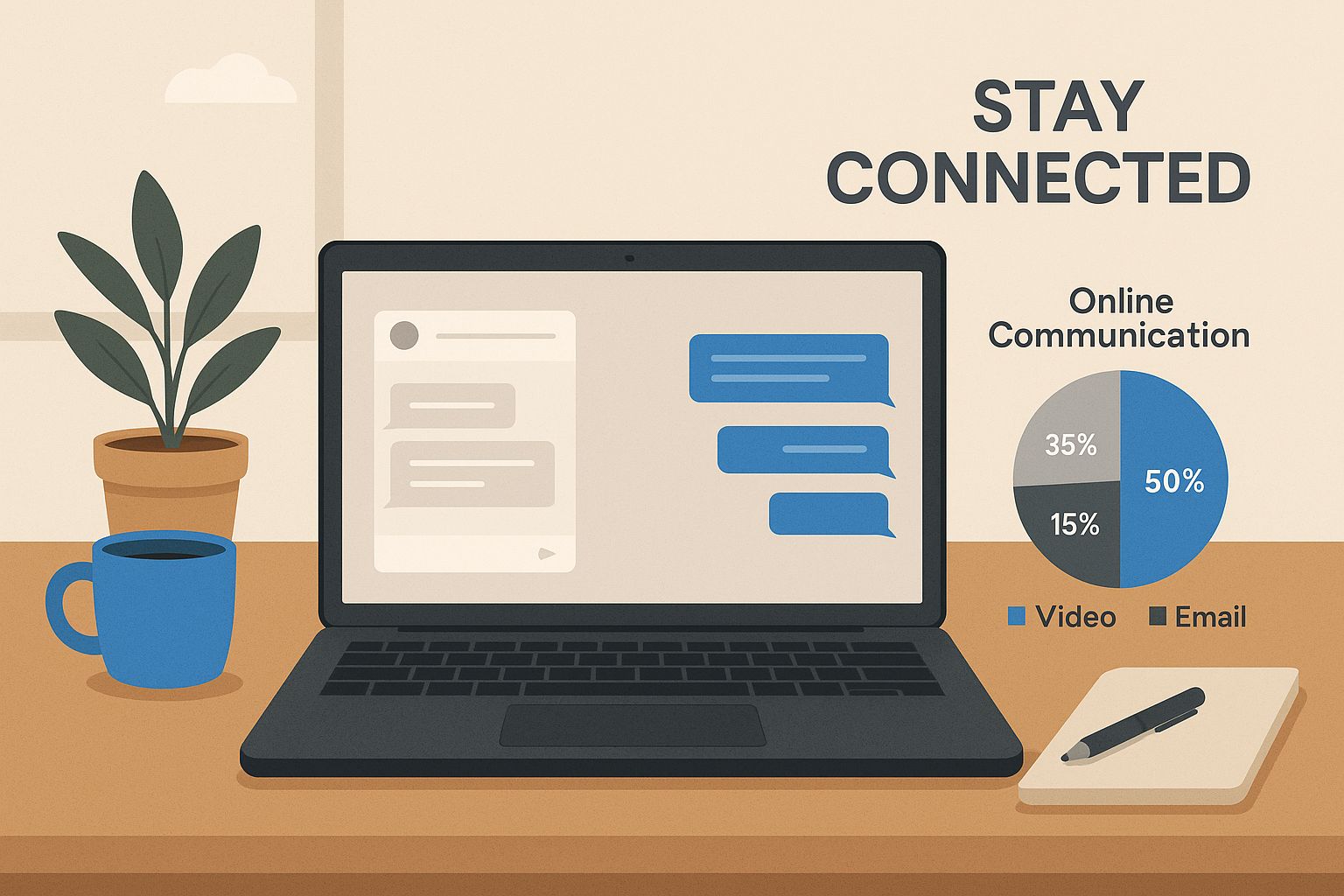
This kind of digital backbone is what separates high-functioning remote teams from the ones that struggle.
Here's a simple, real-world example of what a charter could look like for a marketing team:
- Slack: For quick, non-urgent questions and social banter in our
#watercoolerchannel. Expected Response: Within 3-4 business hours. - Asana: This is our source of truth for all project updates, new tasks, and progress tracking. Expected Response: Check at least twice daily.
- Email: For all formal communication with external partners, vendors, and clients. Expected Response: Within 24 business hours.
- Zoom: Used for scheduled meetings ONLY, like our weekly team syncs, strategy sessions, and 1-on-1s.
- Loom: For pre-recorded project walkthroughs, design feedback, and new process demos. Expected Response: View within 48 hours.
A charter like this provides incredible clarity and peace of mind. Of course, tools are only part of the equation. Exploring different strategies for improving team collaboration will help you build the human connection that makes the technology truly effective. Getting this framework right is a non-negotiable first step in learning how to manage remote teams successfully.
Building a Strong Culture Across Any Distance

Let's be honest: a great company culture can absolutely thrive without a physical office, but it definitely doesn't happen by accident. While virtual happy hours are a nice start, building a truly resilient remote culture requires a much more deliberate touch. It’s all about creating an environment of psychological safety, genuine connection, and shared purpose that spans any distance.
When you manage a remote team, you're not just a manager; you're the architect of that culture. Your real job is to build a system where trust is the default, recognition is frequent, and every single person feels like they truly belong. This is where you graduate from simply managing tasks to actually leading people.
Foster Connections Beyond the To-Do List
In a traditional office, culture often sprouts from those unplanned moments-the quick chat by the coffee machine or a shared laugh over lunch. To get that same magic in a remote setup, you have to intentionally create spaces for people to connect as, well, people.
This is where the idea of a "virtual watercooler" really shines. Set up dedicated channels in Slack or Teams for non-work stuff. I’m talking about channels like #random, #pets-of-the-company, or #what-im-reading. These low-pressure zones are gold for building the personal bonds that ultimately make professional collaboration so much stronger.
Another tactic I’ve seen work wonders is scheduling short, optional video calls with no agenda. Some leaders call them "coffee chats" and randomly pair up team members for a 15-minute call just to get to know each other. The only rule? No work talk allowed. It’s a simple, powerful way to foster human connection.
Celebrate Wins and Reinforce Your Values
When everyone is remote, it's dangerously easy for big wins and hard work to go unnoticed. People can start to feel like their contributions are just disappearing into a digital void. That's why having both formal and informal ways to recognize people is non-negotiable.
- Encourage Peer-to-Peer Recognition: Use a tool or a simple Slack channel where team members can give each other "kudos" or shout-outs. When everyone is empowered to celebrate good work, you cultivate a genuinely supportive atmosphere. A
#winsor#propschannel makes these moments public and shows everyone what success looks like. - Make it a Leadership Habit: As a manager, make it a point to kick off team meetings by highlighting recent accomplishments. Get specific. Don't just say, "Good job, everyone." Instead, try, "I want to give a huge shout-out to Sarah for how she handled that tough client issue. Her grace and professionalism were outstanding."
- Tie Wins to Your Values: When you celebrate, connect the achievement back to a specific company value. This constantly reinforces what you stand for. For example, "This is a perfect example of our 'Customer First' value in action."
An often-overlooked part of culture is how it's communicated. Your company's voice should be consistent everywhere, from public announcements to internal chats. Having clear standards ensures everyone communicates in a way that reflects your core values. Explore our guide on creating brand voice guidelines to see how this can strengthen your internal and external identity.
Design a World-Class Remote Onboarding
An employee's first few weeks set the tone for their entire experience. A thoughtful onboarding process can be the difference between a new hire feeling isolated and one who feels like a core part of the team from day one. Your remote onboarding has to be even more structured and personal than its in-office cousin.
Here are a few things that make a huge impact:
- The Welcome Wagon: Before their first day, send a welcome kit. Include some company swag, their new equipment, and a handwritten note. It's a small gesture that makes a massive first impression.
- A Structured First Week: Give them a detailed schedule for their first week. Block out time for meetings with key people, specific training sessions, and even social check-ins. This removes the anxiety of the unknown and helps them feel productive right away.
- The Buddy System: Assign a "buddy" or mentor who isn't their direct manager. This person is their go-to for all the informal questions-the "unwritten rules" of the company. It gives them a friendly guide and an immediate connection.
By investing in these cultural cornerstones, you create a workplace where people feel deeply connected to the mission and to each other. You'll prove that a strong culture isn't defined by a shared office, but by shared values and intentional connection.
Measuring Performance Without Micromanaging
One of the biggest hurdles for managers new to remote work is letting go of old habits. In an office, it’s easy to look around and equate seeing people at their desks with productivity. When your team is distributed, that whole idea goes out the window. Clinging to it just leads to micromanagement, which kills trust and morale faster than anything else.
The real secret is to build a culture of accountability so strong that you don’t even think about employee monitoring software. When your team knows exactly what success looks like for their role and feels empowered to get there, you don't need to be a digital-shoulder-surfer. You can focus on what actually matters: the results they deliver. It all comes down to trusting your team as professionals and giving them a clear framework to prove you right.
This isn’t just a feel-good management theory; the data backs it up. Studies show that remote workers can be 35% to 40% more productive. Why? Fewer office interruptions, more control over their environment, and the ability to find deep focus. To tap into that potential, you need to manage based on trust and clear, outcome-driven goals. If you're curious about the numbers, there are plenty of remote worker statistics and findings that paint a compelling picture.
Set Goals Based on Results, Not Hours
The foundation of managing a remote team well is measuring what gets done, not how long it took to do it. The question should never be, "Was everyone online for eight hours?" Instead, ask, "Did we hit the objectives we all agreed on?"
This is where frameworks like Objectives and Key Results (OKRs) are a game-changer. They force you to define success in concrete terms.
- Objectives are your big, ambitious goals. Think "Successfully launch the new mobile app feature."
- Key Results are the specific, measurable steps that prove you got there. For example, "Achieve 1,000 new sign-ups in the first month."
When you set clear OKRs, you're giving your team a shared destination on a map. Everyone understands what they're working toward and sees how their individual contributions push the whole team forward. That kind of ownership is way more powerful than just punching a clock.
Use Dashboards for Transparent Progress Tracking
To keep everyone aligned, you need a single source of truth for tracking progress. Performance dashboards, which you can build right into tools like Asana or Jira, provide this kind of visibility. They turn abstract goals into a living, visual roadmap that the whole team can access anytime.
A good dashboard doesn’t need to be complicated. It might track things like:
- Project Milestones: A visual showing which key stages are complete, in progress, or blocked.
- Key Metrics: Charts that show how you're tracking toward your Key Results.
- Task Velocity: A high-level view of how work is moving, which helps you spot bottlenecks early.
This level of transparency makes those constant "just checking in" messages obsolete. Team members can see progress for themselves, and you can spot potential issues before they become full-blown crises. You can even explore various business process automation examples to feed data into these dashboards automatically, saving everyone from tedious manual reporting.
Pro Tip: Keep your dashboards simple. The goal isn't to track every single click and keystroke. It's about providing a clear, at-a-glance view of your most important objectives. Too much data is just noise.
Run One-on-Ones That Actually Build Trust
Regular one-on-ones are the lifeblood of remote management, but they need a different focus. This meeting is not a status report-that’s what your dashboard is for. Think of it as a forward-looking conversation about support, growth, and clearing roadblocks.
Here’s a simple structure I’ve found that works wonders for remote one-on-ones:
- Personal Check-in: Start by genuinely asking how they're doing as a human being.
- Their Agenda: Open the floor to them first. "What's on your mind? What's taking up your headspace this week?"
- Roadblock Removal: Ask the most important question a manager can: "What can I do to help you?"
- Career Growth: Talk about their long-term goals. Where do they want to be in a year? How can you help?
- Feedback Exchange: Give your feedback, but just as importantly, ask for it in return. "What could I be doing better as your manager?"
This approach turns a one-on-one from an interrogation into a coaching session. It shows you’re there to support them, not scrutinize them. When you build this foundation of trust, you create an environment where your team is driven by the mission, not by fear. That’s how you win with a remote team.
Mastering the Hybrid and Asynchronous Workplace

Let's be honest, the modern workplace isn't just "in-office" or "remote" anymore. We're now navigating the world of hybrid and asynchronous work-a setup that brings incredible flexibility but also some serious management headaches. When part of your team is in the office and the rest are spread across different cities or time zones, it's dangerously easy for communication gaps and an "us vs. them" culture to take root.
The key to making this work is to build your company with a remote-first mindset. This isn't just about making a few accommodations for remote staff. It's about designing your entire operational playbook as if everyone were remote. Doing this creates a truly level playing field where an employee's contribution, not their physical location, is what actually matters.
Leveling the Playing Field with Remote-First Etiquette
One of the biggest traps in a hybrid model is something called proximity bias. It's our natural, often unconscious, tendency to give more weight and attention to the people we physically see every day. You chat with them by the coffee machine, their ideas feel more immediate in meetings, and before you know it, your remote colleagues start to feel like second-class citizens.
To fight this, you have to be deliberate about creating equal opportunities for everyone to participate.
- Equalize Your Meetings: This is non-negotiable. If even one person is joining a meeting remotely, everyone should join from their own computer. Yes, even the people sitting in the same conference room. This simple "one person, one screen" rule eliminates those private side-chats and ensures every person's face and voice gets equal space.
- Document Everything: Every important decision, action item, or key conversation needs to be documented where everyone can find it. Whether it happens in a scheduled Zoom call or a spontaneous hallway chat, get it down in a shared space like a company wiki or a project board. This makes crucial information accessible to the entire team, regardless of their time zone or location.
The goal is to make physical presence completely irrelevant to an employee's impact or career growth. When information is shared freely and collaboration tools are used right, the best ideas win-not just the ones from the loudest person in the room.
Embracing the Power of Asynchronous Work
Asynchronous work is the superpower of any high-performing remote or hybrid team. The whole idea is that meaningful work doesn't have to happen at the exact same time for everyone. This is a game-changer for teams spanning different time zones, but it's just as valuable for giving all your employees-remote or in-office-the deep, uninterrupted focus time they need for high-impact work.
With this approach, you shift the team's center of gravity away from constant real-time meetings and toward a shared, written knowledge base. Project management tools become the single source of truth for progress, and thoughtful written updates start to replace a lot of those draining status meetings.
For complex visual explanations, tools like Loom or Vidyard are fantastic for sending async video messages. They allow for detailed walkthroughs that colleagues can watch and digest on their own time. It's also smart to automate routine communications like project reminders or follow-ups. You can learn more about email automation best practices to streamline these workflows and give your team back precious time.
The data backs this up. Research shows that by 2025, the hybrid model is expected to be the main way of working for most office-based roles, with about 50% of employees on a hybrid schedule. More than that, fully remote workers were found to log an average of 51 more productive minutes each day than their peers.
This requires a culture built on trust and a focus on outcomes, not hours logged. You have to empower your team with the autonomy to manage their own schedules while holding them accountable for delivering great results. When you manage your team this way, you unlock a more productive, flexible, and fair workplace for everyone involved.
Answering Your Toughest Remote Management Questions
Even with a solid game plan, leading a remote team always throws a few curveballs your way. Let's be honest, unique challenges are part of the deal. When you're figuring out how to manage remote teams, having straightforward answers to the most common hurdles makes all the difference. I've been there, and this is what I’ve learned.
How Do You Build Trust with a Brand New Remote Team?
Building trust from the get-go isn’t about grand, sweeping gestures. It's about a series of small, consistent, and deliberate actions.
It all starts with radical clarity. Make sure everyone knows exactly what's expected of them in their role and how the team communicates. There can't be any ambiguity about who owns what. From day one, document key decisions and project updates in a shared space everyone can access, like a team wiki in Notion or a dedicated project board. This simple act prevents information from getting trapped with just a few people and shows you’re serious about transparency.
Even more crucial are your one-on-ones. Don't let them become just another status update meeting. This is your time to connect on a human level. Ask about their well-being, what they want to achieve in their career, and what’s actually getting in their way. It shows you see them as people, not just pixels on a screen.
Here's the most powerful thing you can do: Trust your team by default. Give them the autonomy to own their work. Focus on the quality of what they produce, not whether their Slack status is green. Shifting from a mindset of suspicion to one of empowerment is the foundation of a high-performing remote team.
What Are the Biggest Mistakes Managers Make with Remote Teams?
Plenty of fantastic, well-meaning leaders stumble into the same few traps when they first start managing remotely. Just knowing what they are is half the battle.
I see these mistakes trip up managers time and time again:
- Trying to recreate the office online. This is the number one blunder. It leads to a calendar choked with back-to-back meetings and a culture where everyone feels they have to be constantly online, which is a fast track to burnout.
- Focusing on hours logged instead of outcomes delivered. You have to shift your mindset from tracking activity to measuring results. Watching online statuses or expecting instant replies just breeds resentment and shatters trust.
- Forgetting to be intentional about social time. You can't just hope for spontaneous "watercooler" moments to happen. If you don't actively create space for non-work chats and connections, your team will feel isolated and disconnected.
- Letting proximity bias creep in. This is a huge risk in hybrid setups. It’s all too easy to unintentionally favor the people you see in the office, leaving remote folks feeling like second-class citizens who get passed over for cool projects and promotions.
Avoiding these traps means making a conscious pivot. Embrace asynchronous work, measure performance based on results, and create culture-building moments that include everyone, no matter where they log in from.
How Should You Handle Underperformance from a Distance?
Tackling underperformance is tough in any setting, but doing it remotely demands an approach that is incredibly direct yet supportive. You need to come to the conversation with data, clarity, and a lot of empathy to make sure nothing gets lost in translation.
Always schedule a private video call for this. You need to see each other. Come prepared with specific, fact-based examples of where performance is slipping. Stick to things like missed deadlines, tangible project outcomes, or the quality of the work itself-never make assumptions about their effort.
Kick off the conversation by trying to understand what’s really going on. Ask open-ended questions. Is there confusion about expectations? Are they missing a key resource or training? Could they be dealing with burnout or something personal? The goal isn't to place blame; it's to diagnose the problem together.
From that conversation, you can co-create a formal, written-down performance improvement plan (PIP). This isn't a threat; it's a roadmap. It should clearly outline:
- Specific, measurable goals for what needs to change.
- A realistic timeline for hitting those goals.
- The support and resources you will personally provide.
- A schedule for frequent, quick check-ins to track progress.
This kind of structured process ensures the employee knows exactly where they stand and what they need to do, all while feeling like you're in their corner, not pointing a finger.
What Are the Must-Have Tools for an Effective Remote Team?
While your strategy and culture are the most important pieces of the puzzle, you still need the right tech to hold it all together. Think of your tech stack as the digital headquarters for your team. The goal isn't to have the most tools, but the right tools that work together seamlessly, each with a clear job.
A strong remote tech stack usually has these core pieces:
| Tool Category | Purpose | Popular Examples |
|---|---|---|
| Communication Hub | The spot for daily chat, quick questions, and social banter. | Slack, Microsoft Teams |
| Project Management | The single source of truth for tasks, timelines, and progress. | Asana, Trello, Jira |
| Video Conferencing | For face-to-face meetings, one-on-ones, and team hangouts. | Zoom, Google Meet |
| Cloud Collaboration | For working on documents, spreadsheets, and presentations together. | Google Workspace, Office 365 |
| Knowledge Base | A central library for documentation, processes, and how-to guides. | Notion, Confluence |
Beyond these essentials, many teams are getting smarter about their workflows. For example, teams producing a lot of content are discovering how AI tools help with content marketing for startups and significantly accelerating their output. The key is to build a tech ecosystem where every tool has a purpose, which cuts down on confusion and helps your team do their best work.
Ready to manage your remote team with more power and less friction? Stravo AI provides an all-in-one suite to help you create content, analyze data, and collaborate smarter. From our intelligent writing assistant to developer tools, we help teams everywhere work more efficiently. Discover how you can automate tasks and elevate your team’s performance by visiting today.
Write smarter, starting today
Join entrepreneurs and teams who draft, rewrite and ship their content with one AI suite.